
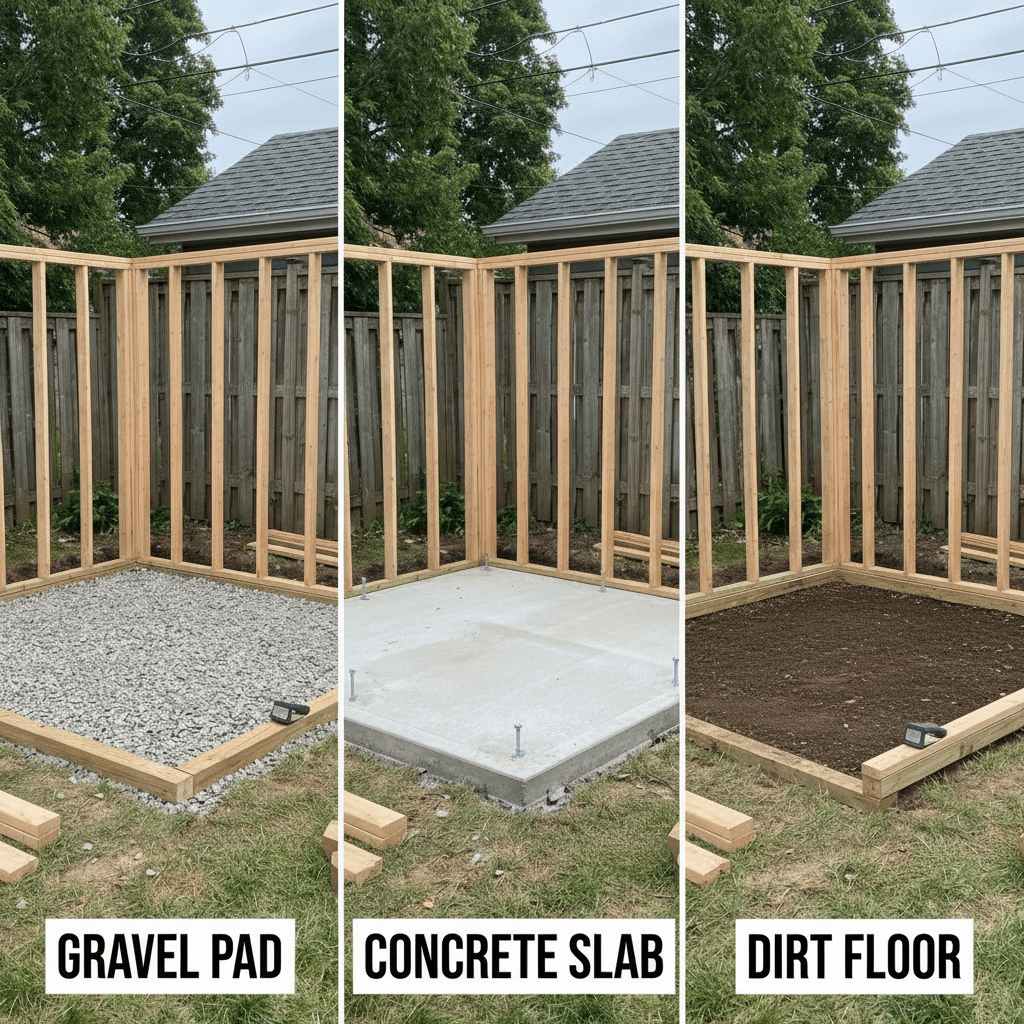
If you want your shed to last in Florida, your foundation matters just as much as the building itself.
Heat, rain, and shifting soil can destroy a poorly prepared base. So which option is best?
Let’s break it down.
Option 1: Gravel Pad (Most Recommended)
A gravel foundation is the go-to choice for most shed owners.
Pros:
- Excellent drainage (critical in Florida)
- Prevents water pooling
- Cost-effective
- Easy to install
Cons:
- Requires proper leveling
- Needs a border (wood or block) to hold gravel
👉 Best for: Most residential sheds (8×10 up to 14×40)
Option 2: Concrete Slab (Most Durable)
Concrete is the strongest option.
Pros:
- Extremely stable
- Long-lasting
- Ideal for heavy use (workshops, garages)
Cons:
- Higher cost
- Requires more prep and permits in some cases
👉 Best for: Large buildings, workshops, or finished spaces
Option 3: Dirt Pad (Budget Option)
This is the cheapest—but riskiest.
Pros:
- Low cost
- Quick setup
Cons:
- Poor drainage
- Can shift over time
- Higher chance of door/frame issues
👉 Best for: Temporary or very small sheds only
What We Recommend at Sheds of Sarasota
For most customers:
✔ Gravel pad = best balance of cost, durability, and drainage
We’ll help you choose the right option based on:
- Shed size
- Property conditions
- Budget
Final Thought
Your shed is only as good as what it sits on.
Cut corners here, and you’ll pay for it later.
 Sheds of Sarasota
Leave a comment